
How Couples and Families Can Organize a Shared Wardrobe: Modern Layouts and Storage Tips
16 Nov 2026

₹39,500 View Product |
₹53,500 View Product |

₹55,500 View Product |
Sharing a bedroom wardrobe is a daily reality for most couples and families. While sharing a single storage unit helps make the most of bedroom floor plans, it often introduces daily friction. Differing routines, contrasting garment styles, and changing household storage needs can quickly cause shelves to become overcrowded and disorganised. When two or more people rely on the same almirah, everyday organization requires thoughtful planning rather than just cramming clothes onto available shelves.
Creating a streamlined shared wardrobe involves understanding each person's storage habits, setting clear personal boundaries inside the cupboard, and selecting a unit layout that accommodates long garments, folded everyday wear, and personal essentials. Whether you are newlyweds setting up your first bedroom or a growing family coordinating storage for multiple generations, these practical modern wardrobe ideas will help you maintain an orderly, stress-free space.
The Core Challenges of Shared Wardrobe Storage
Before dividing up hanging rods and shelving tiers, it helps to examine why shared wardrobes tend to get messy in the first place. Men and women typically have distinct clothing profiles. Traditional Indian attire, such as sarees, lehengas, dupattas, and sherwanis, requires dedicated hanging drop clearance and careful folding, whereas formal shirts, trousers, casual t-shirts, and denim have their own specific dimensions.
When these different categories compete for the same unassigned shelves, several common issues emerge:
- Cross-Clutter: One person's accessories, stacks, or laundry spill over into the other person's space.
- Morning Inefficiency: Searching through mixed piles creates delays when both partners are getting ready at the same time.
- Wasted Vertical Clearance: Clothes hung under high rails often leave underutilized floor or shelf space, while folded stacks elsewhere become too tall and topple over.
- Misplaced Valuables: Without individual lockable zones, documents, watches, jewelry, and personal items lack safe, defined locations.
Key Wardrobe Layout Strategies for Couples
A successful shared cupboard design relies on proportional zoning. Rather than treating an almirah as one large communal compartment, visualize it as two parallel personal hubs connected by a central shared utility zone.
1. Symmetrical or Proportional Division
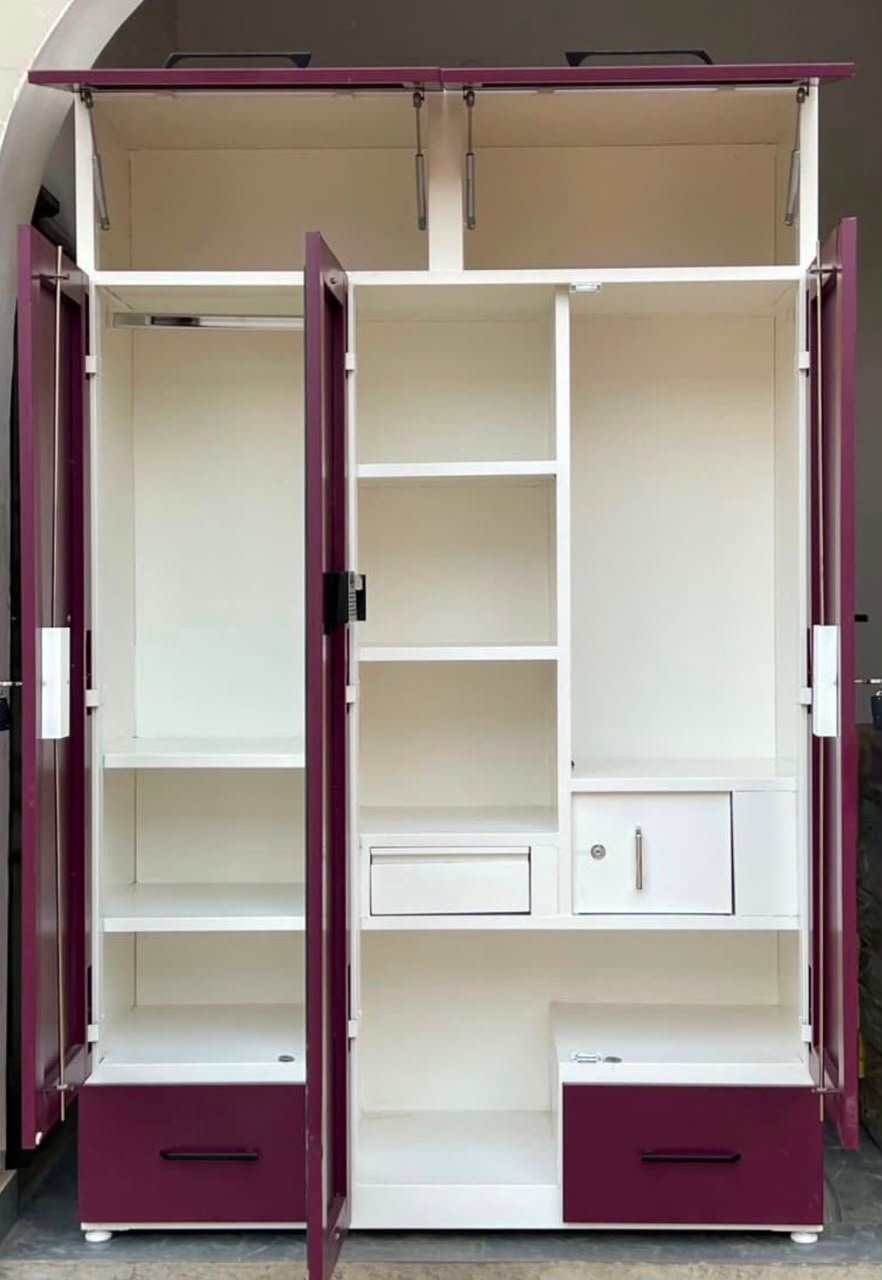
The most intuitive way to maintain peace in a couple's wardrobe is a 50/50 vertical split. In a multi-door almirah, assigning distinct sides ensures that each partner assumes responsibility for their own organization. If one partner has a larger collection of hanging apparel while the other owns primarily folded items, a proportional division can be arranged where hanging rods dominate one side and deep shelving units support the other.
For couples looking for thoughtfully segmented designs, dedicated options like the PARTNER wardrobe provide balanced internal sections crafted specifically to support dual use.
2. Distinct Hanging Zones
Avoid mixing garments on a single rail. A single continuous hanging bar easily leads to crushed sleeves and hidden clothing. Instead, aim for separate hanging spaces. If your almirah layout allows, designate one section with higher clearance for long dresses, kurtas, and sarees, and a separate rail for formal shirts, jackets, and pressed trousers. Using uniform, slimline hangers keeps items neatly aligned and prevents tangled hooks.
3. Dedicated Drawers and Private Lockers
Privacy and security are essential in any shared master bedroom. Modern steel almirahs often feature built-in inner drawers or locking compartments. Ensure each partner has at least one personal drawer for personal accessories, jewelry, wallets, and watches. Having designated private spots prevents everyday dressing clutter from accumulating on open shelves or side tables.
Adapting Wardrobes for Growing Families
When young children or infants share a bedroom, wardrobe demands increase significantly. Baby clothes, bibs, blankets, diapers, and seasonal garments must fit alongside parent wardrobes without displacing essential workwear.
Create a Lower-Level Kids' Zone
If children share the primary bedroom wardrobe, assign them the lower tier shelves or bottom drawers. Lower storage allows growing toddlers and young kids to access their daily clothing easily, encouraging independence when getting dressed for school or playtime. Because children's garments are compact, a single deep shelf fitted with fabric bins or baskets can hold an entire week of outfits.
Utilize Upper Shelving for Household Linens
The highest shelves of an almirah are often hard to reach on a daily basis, making them ideal for family storage rather than everyday dressing. Reserve top compartments for bulky, infrequently accessed items such as spare pillows, heavy winter quilts, guest bedsheets, and seasonal blankets. Storing these bulk textiles high up keeps the primary eye-level zones free for current clothing.
Incorporate Storage Baskets for Grouped Essentials
Small clothing articles like socks, undergarments, vests, baby accessories, and winter caps can quickly turn shelves into a chaotic pile. Sturdy storage baskets or fabric drawer organizers keep smaller essentials categorized by family member. Labeling or color-coding these organizers ensures everyone in the family knows exactly where their belongings go on laundry day.
Choosing the Right Wardrobe Size for Shared Living
No organizational system can compensate for an almirah that is simply too small for your household's requirements. When selecting a wardrobe for dual or family use, width and interior compartmentalization are primary considerations.
- Compact Rooms (Single Couple): A 42-inch to 48-inch multi-shelf almirah can accommodate a couple's routine apparel, provided off-season items are stored in secondary storage bins.
- Spacious Master Bedrooms: Wider layouts provide room for expanded hanging space and dual columns of shelves. Units such as the 5401 offer generous proportions that let couples split everyday storage comfortably without crowding.
- Full Family Storage: For households combining couple wear, occasion wear, and family textiles in one expansive piece, large-scale units like the 6001 provide the breadth and multi-tier capacity needed to serve multiple users seamlessly.
Explore the full range of configurations across the Varsha Almirah shop collection to find dimensions and designs that match your bedroom footprint and family requirements.
Daily Habits to Maintain an Organized Shared Wardrobe
Even the best designed almirah requires consistent everyday habits to prevent clutter from creeping back in. Couples and families can maintain an uncluttered wardrobe with a few shared principles:
- The One-In, One-Out Guideline: Whenever you purchase a new outfit or set of seasonal garments, evaluate older pieces you no longer wear. Donating or archiving unused clothes keeps volume manageable.
- Bi-Annual Seasonal Swaps: At the turn of summer and winter, rotate heavy woolens and festive ethnic garments away from central shelves into top compartments or storage bags.
- Weekly Reset: Dedicate ten minutes on weekends to folding clean laundry neatly and returning misplaced items to their designated zones before the workweek begins.
For more home planning advice and storage maintenance techniques, browse our practical guides on our bedroom storage blog.